CLEFT LIP REPAIR SURGERY
RESTORE & REBUILD
NATURAL FUNCTION, BALANCED SMILES
Cleft lip repair surgery is a reconstructive procedure designed to correct a separation in the upper lip that develops before birth. The procedure helps improve appearance, lip function, speech development, feeding ability, and overall facial balance while creating more natural-looking contours.
Procedure Time
Recovery
Anaesthesia
1000+
Understanding the Procedure
What Is
Cleft Lip Repair Surgery?
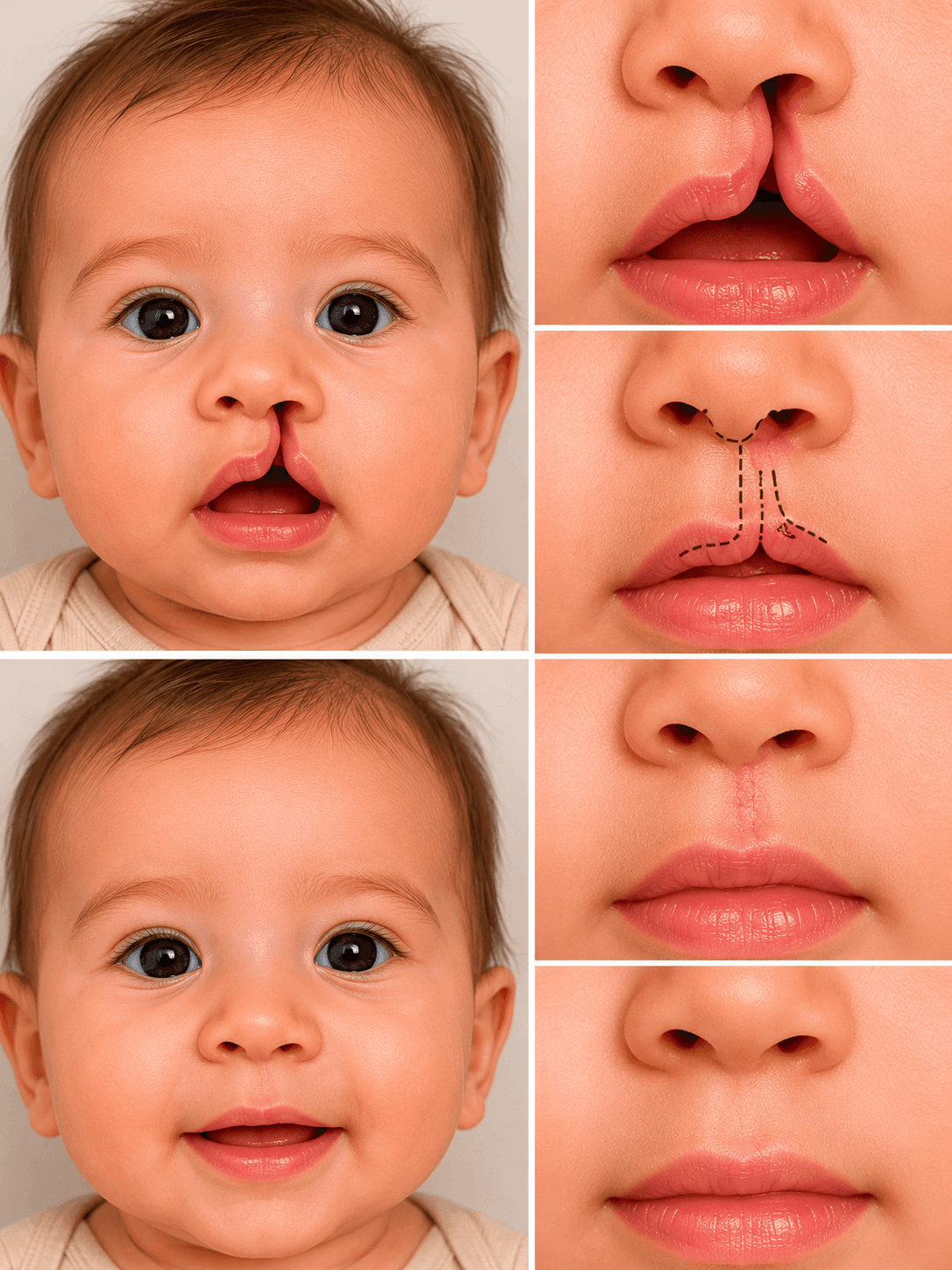
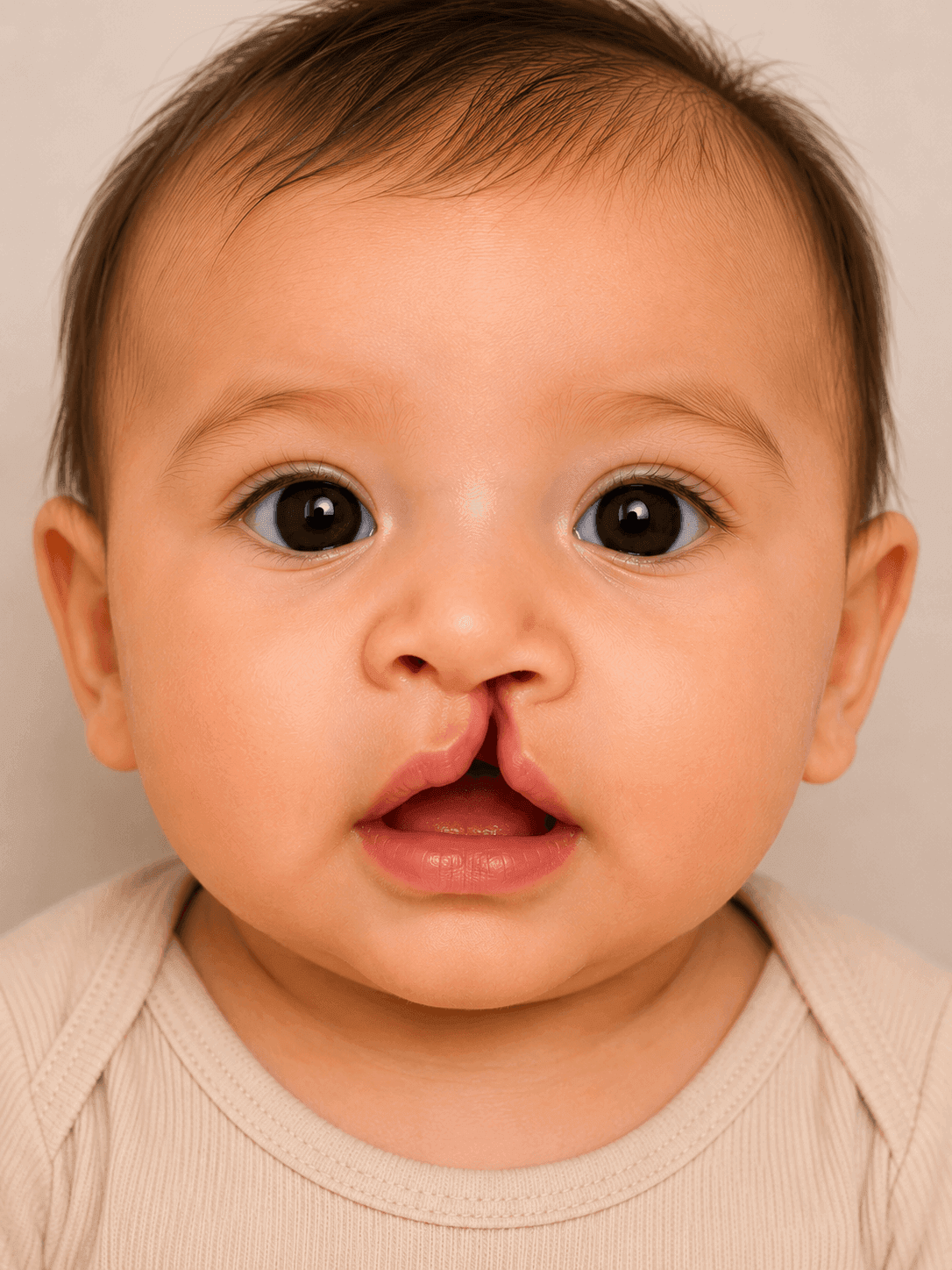
Cleft lip repair is a reconstructive surgical procedure designed to close and reshape an opening or separation in the upper lip. The condition occurs during fetal development and may affect one or both sides of the lip. In some cases, the cleft may also involve the nose or palate.
The procedure restores lip continuity, improves facial symmetry, and supports important functions such as feeding, speech development, and breathing.
Cleft lip repair may be performed as a standalone procedure or combined with cleft palate repair and additional reconstructive treatments depending on the patient’s needs.
Modern cleft repair techniques focus on restoring both function and natural-looking appearance while minimizing visible scarring whenever possible.
Who Is This Procedure For?
Are You a Good Fit?
Am I a Good
Candidate?
- Infant or child diagnosed with cleft lip
- Difficulty feeding or latching properly
- Facial asymmetry related to cleft deformity
- Need for improved lip function and contour
- Candidate for reconstructive facial surgery
- Good overall health for surgery and recovery
- Family committed to follow-up care and treatment planning
- Realistic expectations regarding reconstructive outcomes
Not Sure If You Qualify?
- One-on-one consultation with an expert
- Personalized treatment planning
- No obligation to proceed
Your Journey
What to Expect
Before Surgery
Preparation
Surgery Day
Healing
The Outcome
WHY CONSIDER CLEFT LIP REPAIR
The Benefits of
Cleft Lip Repair Surgery
Improved Lip Function
Restores lip continuity to help improve feeding, speech, and oral function.
Enhanced Facial Symmetry
Creates a more balanced and natural-looking facial appearance.
Support for Speech Development
Helps improve oral structure important for clearer speech development and communication.
Improved Feeding Ability
Many infants experience improved feeding and latching after corrective surgery.
Natural-Looking Results
Modern reconstructive techniques focus on restoring function while minimizing visible scarring whenever possible.
Boost in Confidence & Quality of Life
Corrective surgery may improve social confidence, emotional well-being, and overall quality of life as the child grows.
Transparency First
Risks &
Considerations
Swelling & Tenderness
Common during the first 1–2 weeks and gradually improves with healing and proper care.
Scarring
Some scarring is expected, though modern techniques are designed to minimize visible scar appearance over time.
Anaesthesia Risks
General anesthesia carries standard surgical risks, which are carefully monitored by the medical team.
Healing Variations
Healing differs from patient to patient, and some individuals may require future revision procedures as facial growth continues.
Feeding Adjustments During Recovery
Temporary feeding modifications may be required while healing takes place.
Need for Additional Treatments
Some patients may require future speech therapy, orthodontics, or additional reconstructive procedures depending on growth and development.
Investment & Financing
Cost &
Financing Options
Typical Range
Get a Personalised Quote
- Surgeon fee
- Hospital and anesthesia costs
- Pre- and post-operative care
- Medications and dressings
- Follow-up appointments during recovery
- Long-term treatment planning support
Common Questions
Cleft Lip Repair
FAQs
When is cleft lip repair usually performed?
Will there be visible scars?
Can cleft lip affect feeding and speech?
Will additional surgeries be needed later?
How long does recovery take?
Is cleft lip repair painful?
Can adults undergo cleft lip correction?
How do I prepare for my consultation?
You May Also Consider
Related Procedures

Pediatric Surgery

Pediatric Surgery