
BREAST REDUCTION SURGERY
RELIEVE & RESHAPE
LIGHTER, BALANCED COMFORT
Breast reduction is a cosmetic and functional procedure designed to remove excess breast tissue, fat, and skin to create a lighter, more proportionate shape. It helps relieve physical discomfort while improving body balance and confidence.
Procedure Time
Recovery
Anaesthesia
1500+
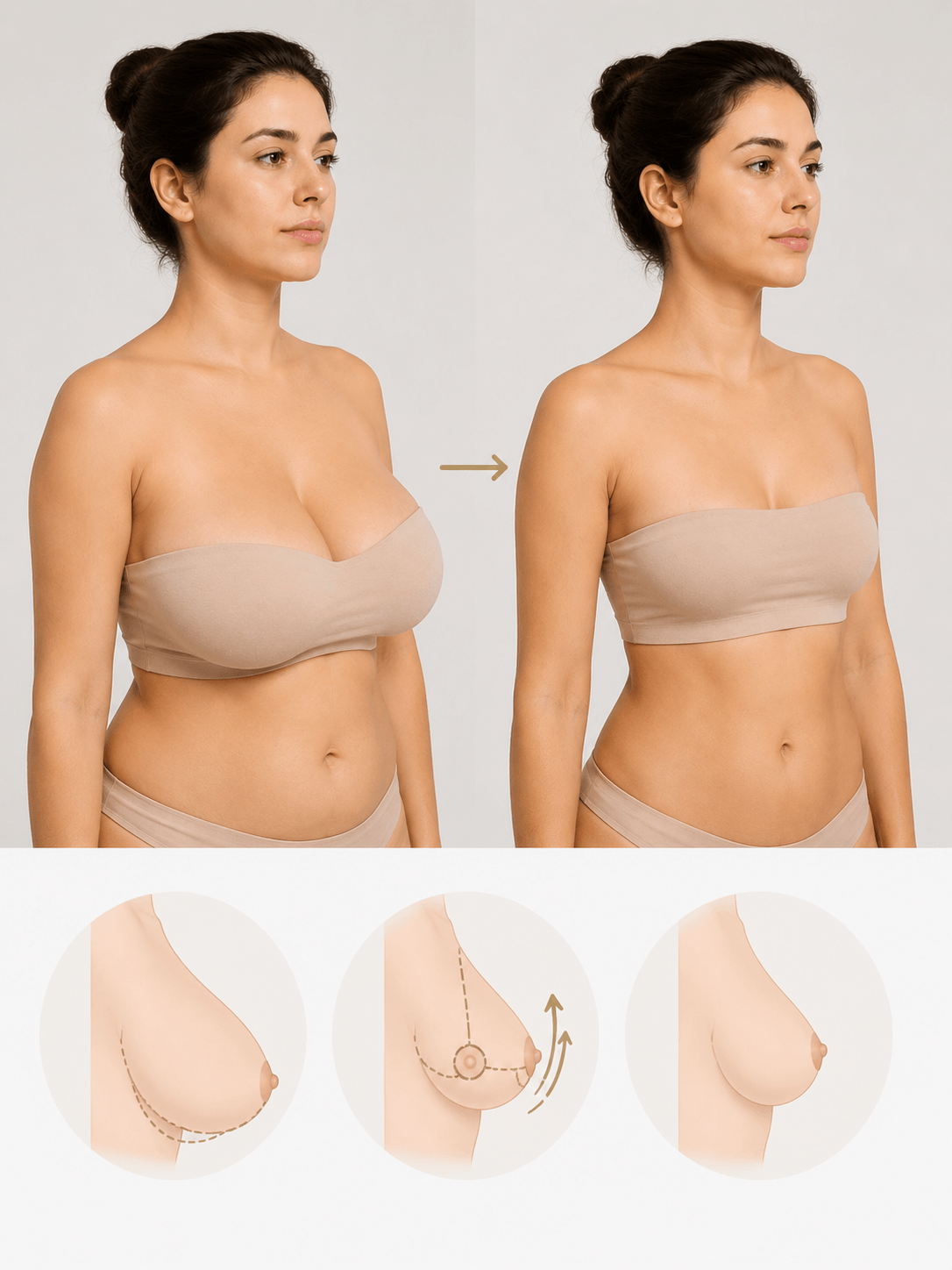
Understanding the Procedure
What Is
Breast Reduction?
Breast reduction, also known as reduction mammoplasty, is a surgical procedure that removes excess breast tissue, fat, and skin to reduce breast size and reshape the breasts for a more balanced, comfortable appearance.
Many individuals choose this procedure to relieve physical discomfort such as back, neck, and shoulder pain, as well as to improve posture and overall body proportions.
Modern techniques focus on reshaping the breasts while maintaining a natural look, improved symmetry, and proportionate results.
Who Is This Procedure For?
Are You a Good Fit?
Am I a Good
Candidate?
- You are in good overall health with no serious medical conditions
- You experience back, neck, or shoulder pain due to breast size
- You have skin irritation or discomfort beneath the breasts
- You find physical activities difficult due to breast weight
- You have difficulty finding properly fitting clothing
- You are a non-smoker or willing to stop before surgery
- You have realistic expectations about the outcome
- You can take time off for proper recovery
Not Sure If You Qualify?
- One-on-one consultation with an expert
- Personalized treatment planning
- No obligation to proceed
Your Journey
What to Expect
Before Surgery
Preparation
Surgery Day
Performed under general anesthesia, the procedure typically takes 2–4 hours. Excess tissue, fat, and skin are removed, and the breasts are reshaped for improved comfort and proportion.
Healing
Swelling and discomfort improve within 1–2 weeks. Most patients return to light activities within a week, with gradual improvement over time.
The Outcome
As healing progresses, the breasts settle into a lighter, more natural shape. Final results become fully visible over the following months.
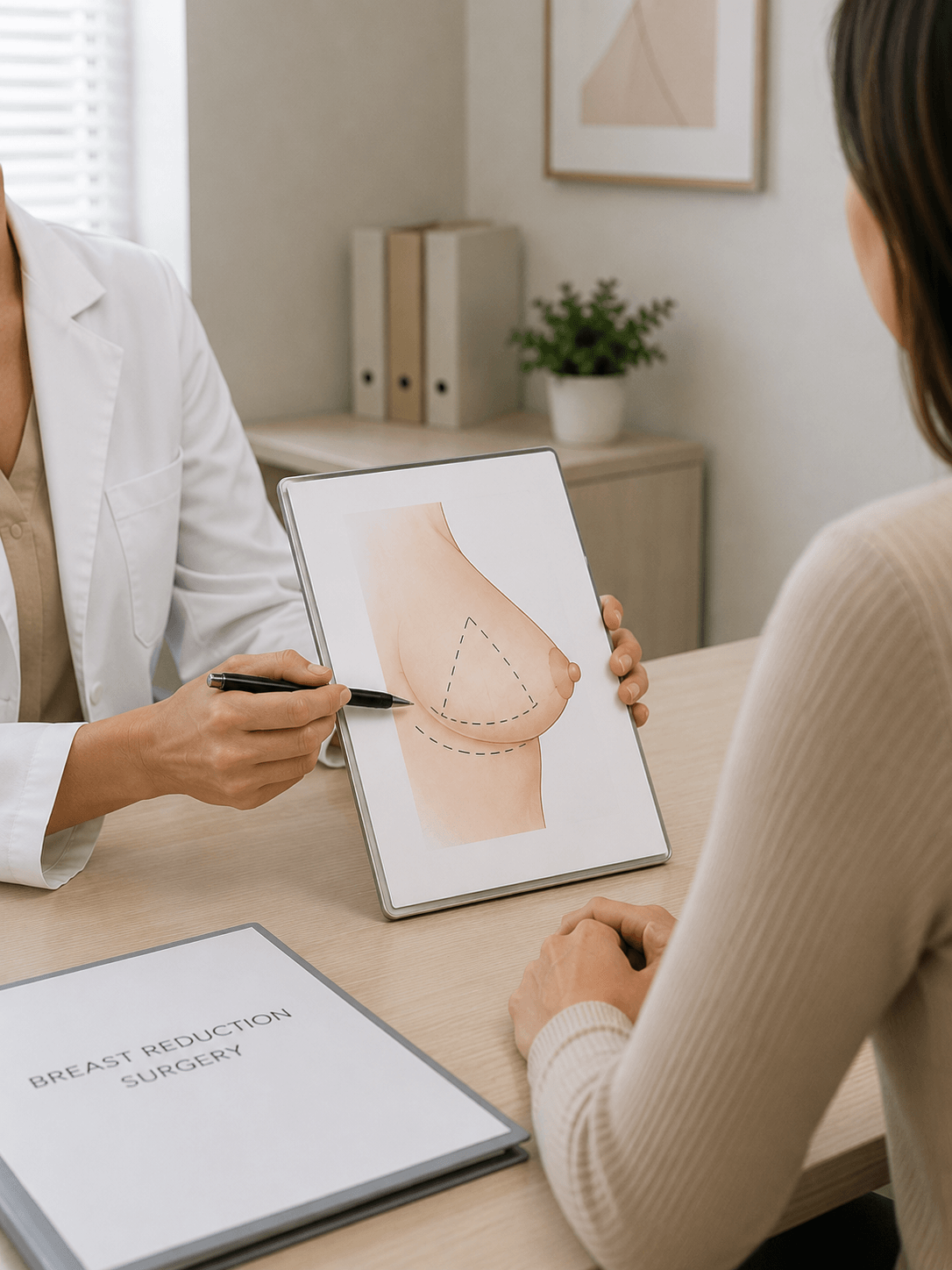


WHY CONSIDER A BREAST REDUCTION SURGERY
The Benefits of
Breast Reduction Surgery
Relief from Physical Discomfort
Reduces back, neck, and shoulder pain caused by the weight of large breasts.
Improved Posture
Less strain on the upper body helps promote better posture and spinal alignment.
Enhanced Comfort in Daily Activities
Makes exercise, movement, and everyday tasks easier and more comfortable.
Better Clothing Fit
Allows for a wider range of clothing options and improved fit.
Reduced Skin Irritation
Minimizes rashes and irritation beneath the breasts caused by friction and moisture.
Boost in Confidence
Creates a more proportionate body shape, helping you feel more comfortable and confident.
Transparency First
Risks &
Considerations
Swelling & Discomfort
Common in the first 1–2 weeks. Most symptoms improve gradually with proper care.
Infection
Rare but possible. Prevented with sterile techniques and treated effectively if detected early.
Scarring
Incisions are necessary for lifting and reshaping, but are carefully placed and typically fade over time.
Changes in Sensation
Temporary or, in rare cases, permanent changes in nipple or breast sensation may occur.
Anaesthesia Risks
General anesthesia carries standard risks, which are carefully monitored by the medical team.
Asymmetry or Healing Variations
Minor differences in healing may occur. In rare cases, adjustments may be required after recovery.
Investment & Financing
Cost &
Financing Options
Typical Range
Get a Personalised Quote
- Surgeon fee
- Anaesthesiology fee
- Accredited surgical facility fee
- All pre- and post-operative appointments
- Medications, surgical bra, and dressings
- Follow-up support during recovery
Common Questions
Breast Reduction
FAQs
How long does breast reduction recovery take?
Will there be visible scars?
Will my breasts look natural after surgery?
When will I see final results?
Can I breastfeed after breast reduction?
Is breast reduction painful?
Will insurance cover breast reduction?
How do I prepare for my consultation?
You May Also Consider
Related Procedures

Breast Surgery

Breast Surgery