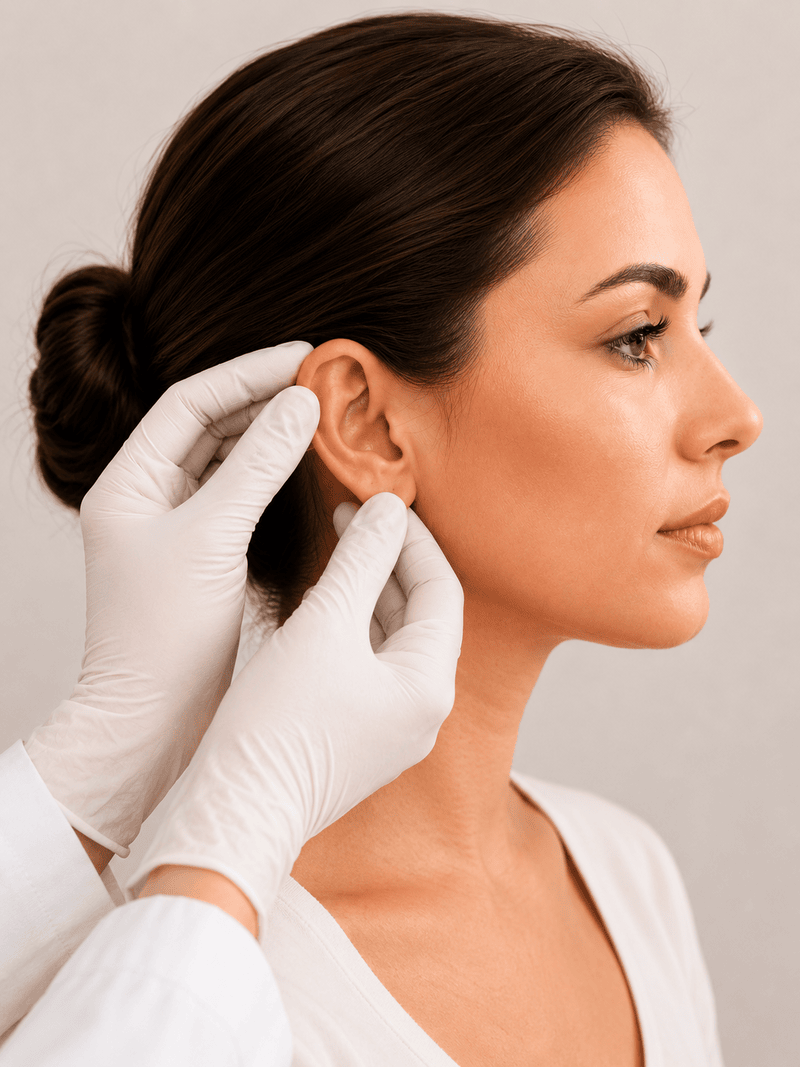
Ear pinning surgery is a cosmetic procedure designed to reposition prominent ears closer to the head for a more balanced and proportionate appearance. The procedure creates natural-looking contours while helping improve confidence and facial harmony.
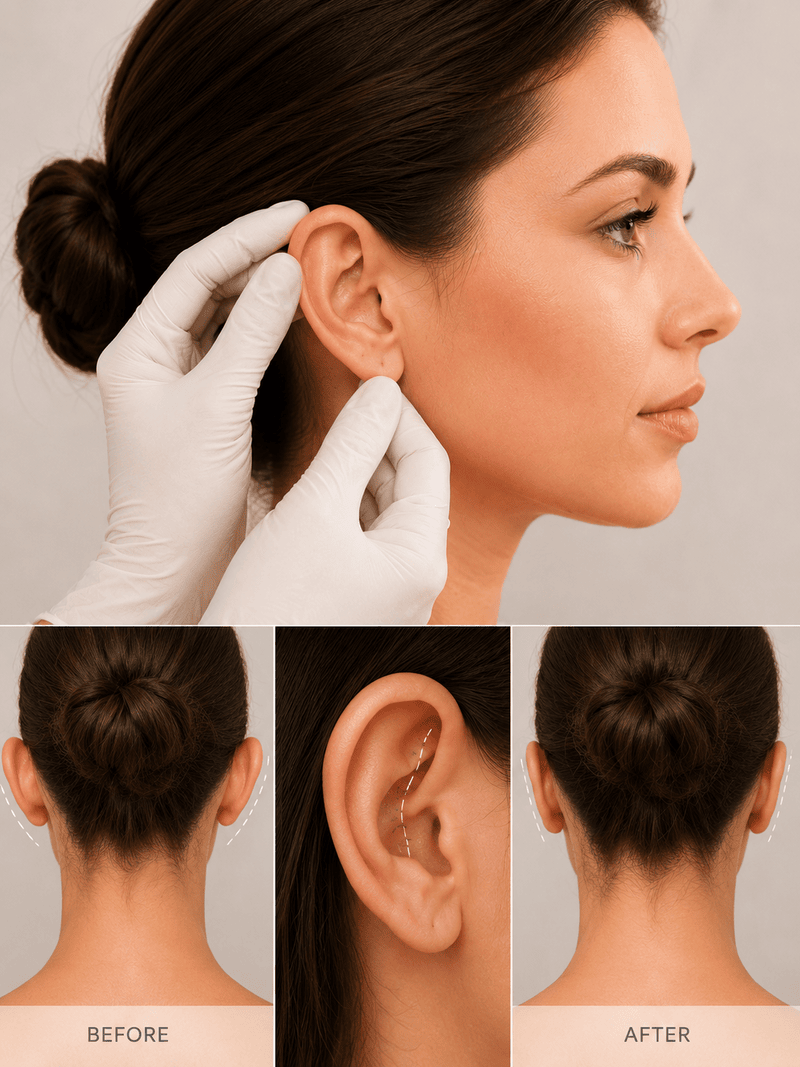
Ear pinning, also known as otoplasty, is a cosmetic procedure designed to reposition prominent or protruding ears closer to the head. The surgery reshapes and adjusts the ear cartilage to create a more balanced, natural-looking contour while preserving the ear’s normal appearance.
The procedure is commonly performed on both children and adults who feel self-conscious about ear prominence or asymmetry.
Modern ear pinning techniques focus on subtle refinement and natural-looking correction while maintaining proper ear shape and proportion.
Mild swelling and tenderness improve within the first week. Most patients return to normal activities within 7–10 days while continuing to heal gradually.
As healing progresses, the ears appear more balanced, proportionate, and naturally positioned for improved facial harmony.
Repositions protruding ears closer to the head for a more balanced appearance.
Creates better proportion between the ears and facial features for improved symmetry.
Modern techniques focus on subtle reshaping while preserving natural ear contours.
Improves uneven ear positioning and contour irregularities for a more refined appearance.
Results are durable and designed to maintain ear shape and positioning over time.
Many patients feel more comfortable and confident in social settings, hairstyles, and photos after surgery.
Mild swelling, tenderness, and bruising are common during the first week and improve gradually with healing.
Rare but possible. Prevented with sterile techniques and managed effectively if detected early.
Incisions are typically hidden behind the ears, making visible scarring minimal in most cases.
Local anesthesia with sedation or general anesthesia carries standard risks, which are carefully monitored by the medical team.
Some patients may experience temporary numbness or sensitivity around the ears during recovery.
Healing differs from patient to patient. Minor asymmetry or additional adjustments may occasionally be required.